WEBINAR | Up to 40% Faster Automated TEM Lamella Preparation with new Ga⁺ FIB Column

Master 3D Characterization
for Material Science with Tescan Solutions

As materials research advances, understanding internal structures, defects, and properties at multiple scales is essential. Tescan’s 3D characterization solutions provide high-resolution insights through micro-CT, FIB-SEM tomography, and correlative imaging, enabling researchers to analyze materials with unmatched precision.

hero
Frame 915
Unlocked content

Tescan AMBER X with iFIB+™ control and real-time SE signal end pointing delivers precise Sub-20 nm node delayering. Achieve planar surfaces below 5 nm RMS roughness, maintain dielectric compatibility, and prepare contamination-free structures ready for in-situ nanoprobing and electrical failure analysis.

Why Perform Sub-20 nm Node Delayering

with Tescan AMBER X?

01
Root of the Problem

Common Challenges in High-Resolution Material Analysis

Advanced materials used in energy storage, aerospace, nanotechnology, and biomedical applications require in-depth structural insights. However, traditional imaging techniques often fall short when analyzing multi-phase structures, nanoscale defects, and buried interfaces.

Tescan AMBER X Plasma FIB-SEM addresses these issues by integrating high-throughput Xe+ milling with advanced delayering workflows in a single instrument:
01

Targeted Material Selection

Identifying the region of interest with SEM and correlative imaging.

02

Precision Ion Beam Milling

Layer-by-layer removal of material using Ga+ or Xe+ plasma FIB.

02
Materials and Methods

How Sub-20 nm Node Delayering Was Performed Using Tescan AMBER X

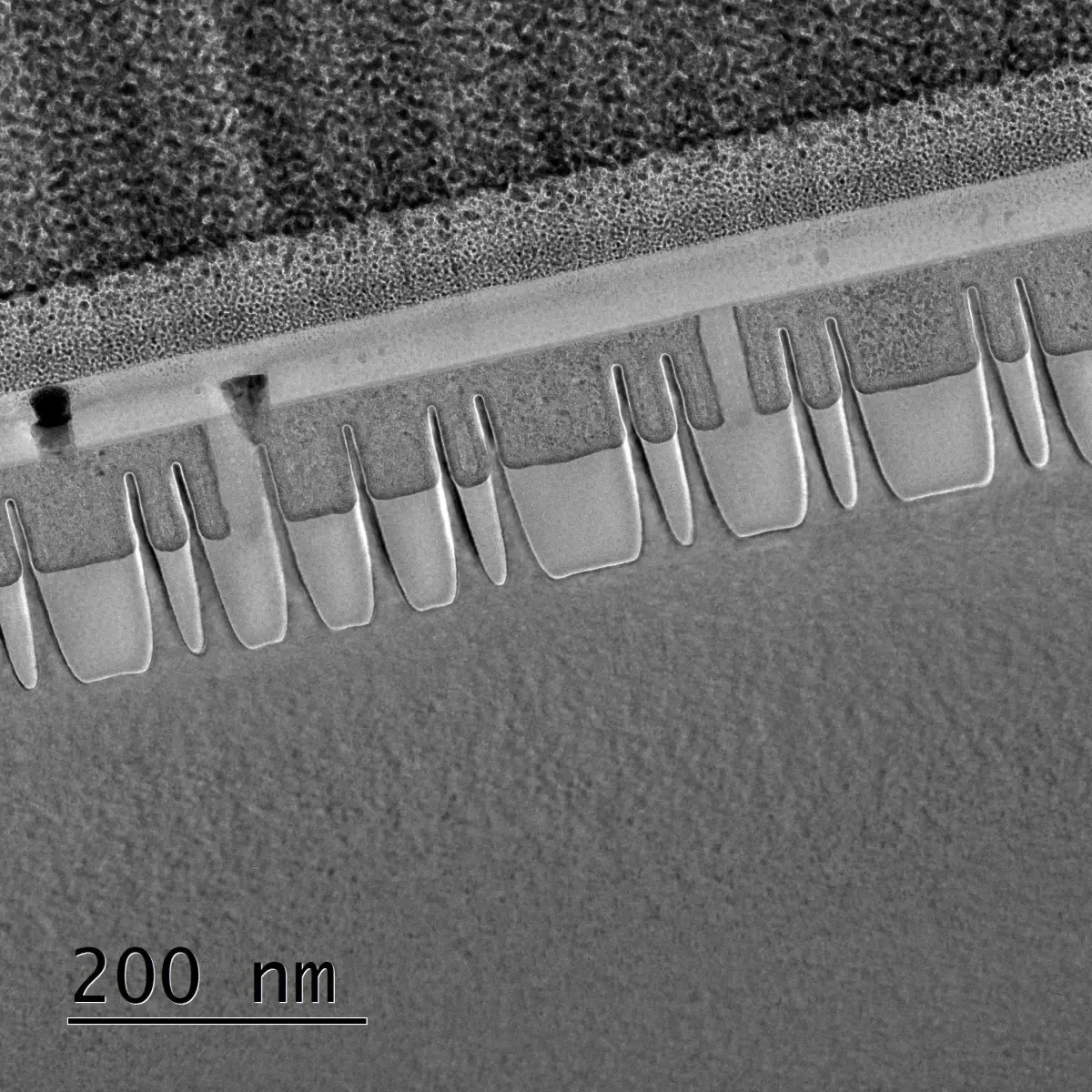
A 14 nm Intel Skylake CPU and advanced 7 nm/5 nm CMOS devices were selected to demonstrate precise delayering and in-situ nanoprobing. Initial surface milling was carried out using Xe+ plasma FIB under iFIB+™ control, ensuring layer-by-layer removal across large device areas. Real-time SE signal end pointing was used to identify transistor layers and prevent over-milling.

Nanoflat etch was applied to achieve surface planarity under 5 nm RMS, ensuring reliable probe contact on sensitive low-k dielectrics. A-Maze™ gas chemistry provided selective copper removal while maintaining oxidation-free surfaces.

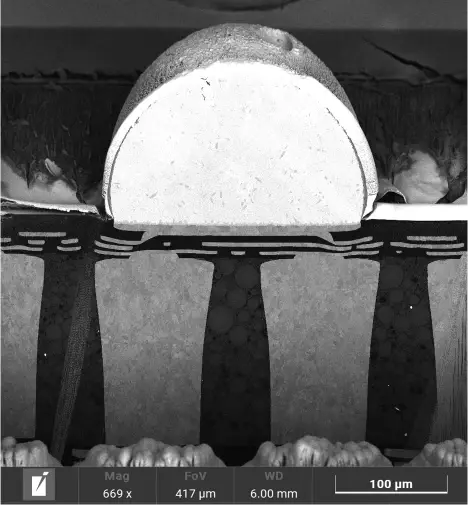
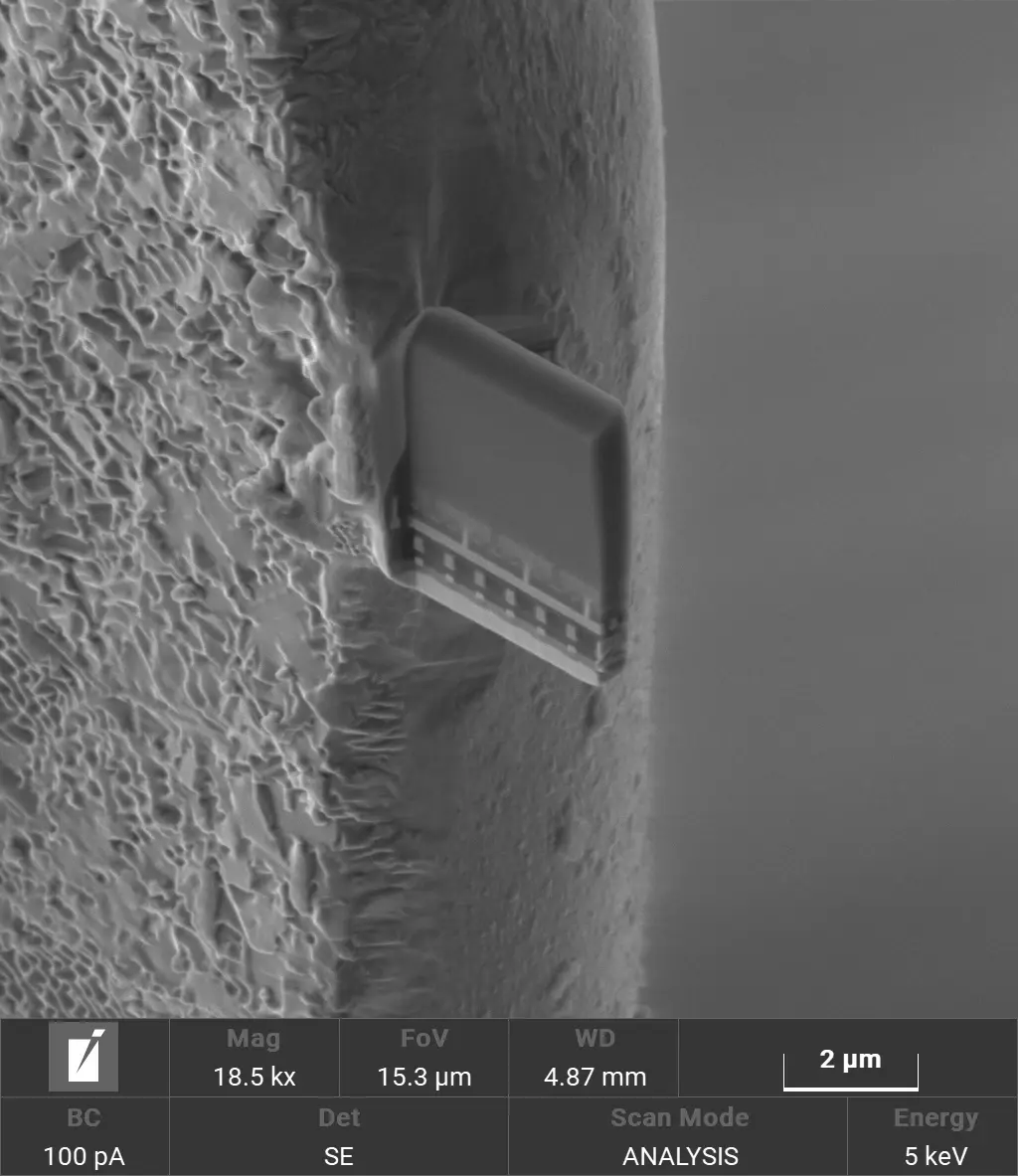
Following delayering, in-situ nanoprobing was performed directly within the SEM chamber using Kleindiek PS8 probes. Electrical measurements such as EBAC and conductive AFM were integrated into the workflow, enabling transistor-level validation of PMOS and NMOS structures without contamination.

media.licdn.comdmsimagev2D4E22AQHf03XE-aGzLQfeedshare-shrink_2048_1536B4EZpUanfuIwAw-01762352858564

03
Results and Discussion

Integrated Delayering and Nanoprobing Reveals Electrical Pathways in Advanced Nodes

A 14 nm Intel Skylake CPU and advanced 7 nm/5 nm CMOS devices were selected to demonstrate precise delayering and in-situ nanoprobing. Initial surface milling was carried out using Xe+ plasma FIB under iFIB+™ control, ensuring layer-by-layer removal across large device areas. Real-time SE signal end pointing was used to identify transistor layers and prevent over-milling.

Nanoflat etch was applied to achieve surface planarity under 5 nm RMS, ensuring reliable probe contact on sensitive low-k dielectrics. A-Maze™ gas chemistry provided selective copper removal while maintaining oxidation-free surfaces.

Following delayering, in-situ nanoprobing was performed directly within the SEM chamber using Kleindiek PS8 probes. Electrical measurements such as EBAC and conductive AFM were integrated into the workflow, enabling transistor-level validation of PMOS and NMOS structures without contamination.

Video title

Headline 2

Headline 3

Identifying the region of interest with SEM and correlative imaging.

Headline 3

Identifying the region of interest with SEM and correlative imaging.

Headline 3

Identifying the region of interest with SEM and correlative imaging.

04
Results and Discussion

Integrated Delayering and Nanoprobing Reveals Electrical Pathways in Advanced Nodes

A 14 nm Intel Skylake CPU and advanced 7 nm/5 nm CMOS devices were selected to demonstrate precise delayering and in-situ nanoprobing. Initial surface milling was carried out using Xe+ plasma FIB under iFIB+™ control, ensuring layer-by-layer removal across large device areas. Real-time SE signal end pointing was used to identify transistor layers and prevent over-milling.

Nanoflat etch was applied to achieve surface planarity under 5 nm RMS, ensuring reliable probe contact on sensitive low-k dielectrics. A-Maze™ gas chemistry provided selective copper removal while maintaining oxidation-free surfaces.

Following delayering, in-situ nanoprobing was performed directly within the SEM chamber using Kleindiek PS8 probes. Electrical measurements such as EBAC and conductive AFM were integrated into the workflow, enabling transistor-level validation of PMOS and NMOS structures without contamination.

media.licdn.comdmsimagev2D4E22AQF51D3uvWXzHAfeedshare-shrink_2048_1536B4EZpUanfhIwAw-01762352859150
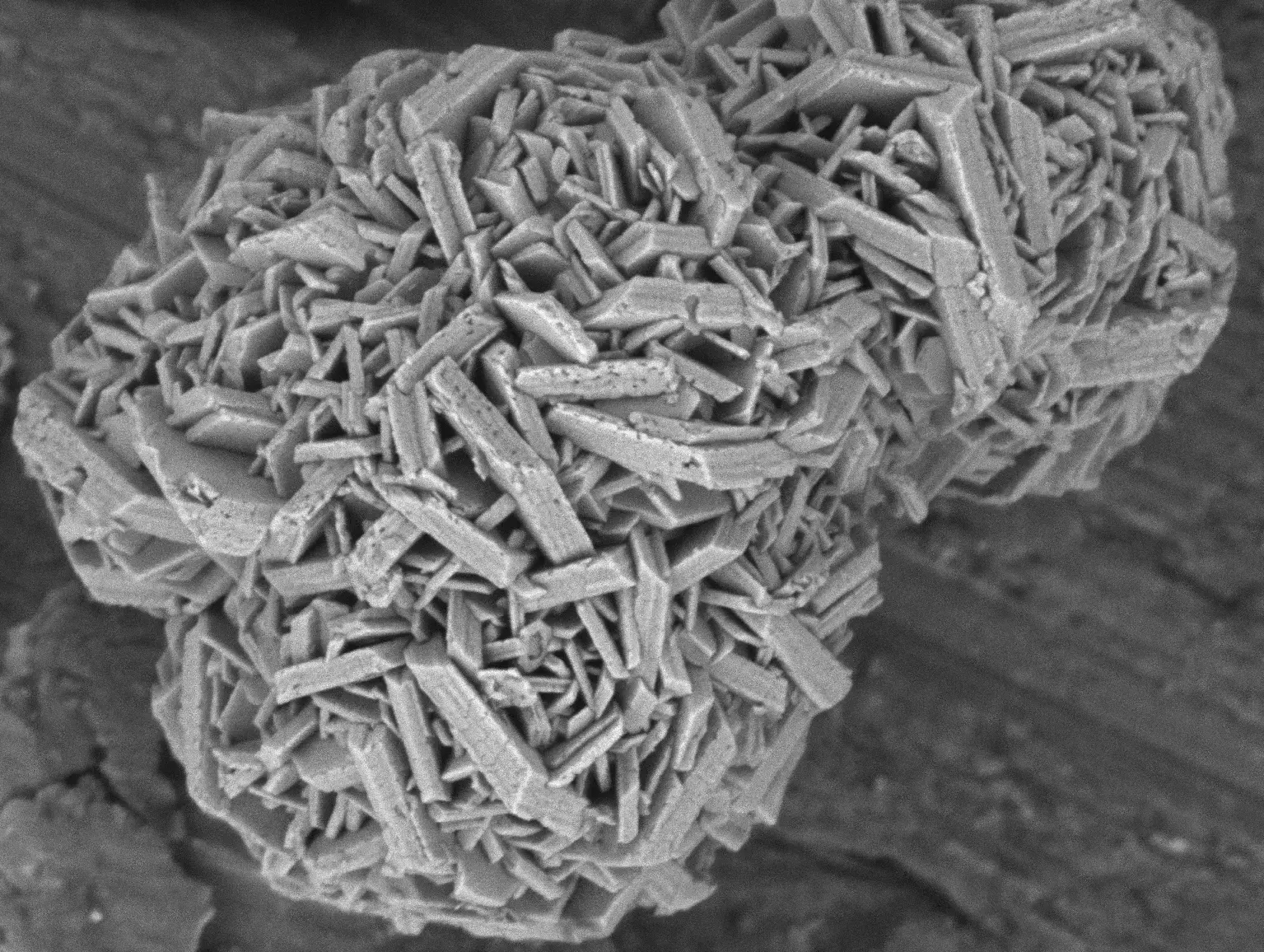
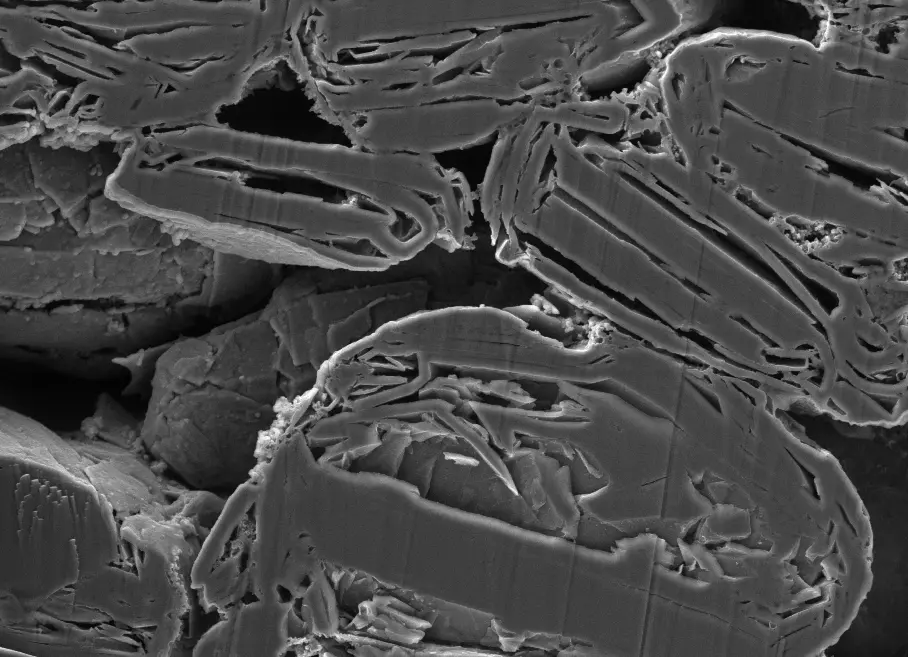
Electrode particle degradation in lithium-ion batteries.

Headline 2

Headline 3

Identifying the region of interest with SEM and correlative imaging.

Headline 3

Identifying the region of interest with SEM and correlative imaging.

Headline 3

Identifying the region of interest with SEM and correlative imaging.

Download whitepapers

All whitepapers related to this workflow can be easily downloaded as PDFs here:

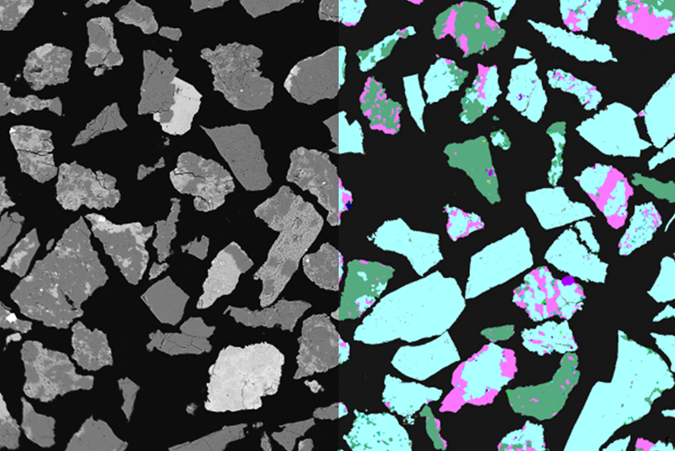
1_Phase map of heat-treated black mass (1)

Whitepaper headline

Lorem ipsum dolor sit amet, consectetur adipiscing elit. Vivamus eu semper enim.

1_Phase map of heat-treated black mass (1)

Whitepaper headline

Lorem ipsum dolor sit amet, consectetur adipiscing elit. Vivamus eu semper enim.

1_Phase map of heat-treated black mass (1)

Whitepaper headline

Lorem ipsum dolor sit amet, consectetur adipiscing elit. Vivamus eu semper enim.

1_Phase map of heat-treated black mass (1)

Whitepaper headline

Lorem ipsum dolor sit amet, consectetur adipiscing elit. Vivamus eu semper enim.

GET IN Touch

Contact us

Get the most out of Tescan

This is more than information; it's an advantage. We've compiled our technical whitepapers, detailed product flyers, and on-demand webinars to provide you with the knowledge that makes a real difference. Sign up now to access the insights you need to make an impact.

Unlocked content

Tescan AMBER X with iFIB+™ control and real-time SE signal end pointing delivers precise Sub-20 nm node delayering. Achieve planar surfaces below 5 nm RMS roughness, maintain dielectric compatibility, and prepare contamination-free structures ready for in-situ nanoprobing and electrical failure analysis.

Why Perform Sub-20 nm Node Delayering

with Tescan AMBER X?

Common Challenges in High-Resolution Material Analysis

Advanced materials used in energy storage, aerospace, nanotechnology, and biomedical applications require in-depth structural insights. However, traditional imaging techniques often fall short when analyzing multi-phase structures, nanoscale defects, and buried interfaces.

FIB-SEM tomography addresses these challenges by providing:

  • Sub-nanometer precision in 3D imaging for detailed microstructural analysis.
  • Site-specific cross-sectioning to study buried features without sample destruction.
  • Multi-modal integration with EDS and EBSD for correlative material characterization.

FIB-SEM Tomography Workflow for 3D Material Characterization

Tescan’s FIB-SEM tomography workflow enables researchers to analyze materials at an unmatched resolution, revealing critical structural details that impact performance, durability, and failure mechanisms.

Key Workflow Steps:

01

Targeted Material Selection

Identifying the region of interest with SEM and correlative imaging.

02

Precision Ion Beam Milling

Identifying the region of interest with SEM and correlative imaging.

03

3D Image Acquisition & Reconstruction

Identifying the region of interest with SEM and correlative imaging.

Common Challenges in High-Resolution Material Analysis

Advanced materials used in energy storage, aerospace, nanotechnology, and biomedical applications require in-depth structural insights. However, traditional imaging techniques often fall short when analyzing multi-phase structures, nanoscale defects, and buried interfaces.

FIB-SEM tomography addresses these challenges by providing:

  • Sub-nanometer precision in 3D imaging for detailed microstructural analysis.
  • Site-specific cross-sectioning to study buried features without sample destruction.
  • Multi-modal integration with EDS and EBSD for correlative material characterization.

Unlock 
tescan insight

leave a contact to access

Get the most out of Tescan

This is more than information; it's an advantage. We've compiled our technical whitepapers, detailed product flyers, and on-demand webinars to provide you with the knowledge that makes a real difference. Sign up now to access the insights you need to make an impact.

Tescan Vega

Technical specification
SEM
Resolution
20 eV - 30 keV
Landing energy
0.6 nm @ 15 keV
1.0 nm @ 1 keV
STEM
Resolution @ 30 keV
0.7 nm
FIB preparation
process
Max material removal
100 nA
Optimal final polish
2 kV
SEM
Resolution
20 eV - 30 keV
Landing energy
0.6 nm @ 15 keV
1.0 nm @ 1 keV
STEM
Resolution @ 30 keV
0.7 nm
FIB preparation
process
Max material removal
100 nA
Optimal final polish
2 kV
Image Element (1)

Tescan technology

used in this workflow

TESCAN AMBER X 2

Contextual advertising can be profitable. It can either pay for your hosting and maintenance costs for you website or it can pay for a lot more.
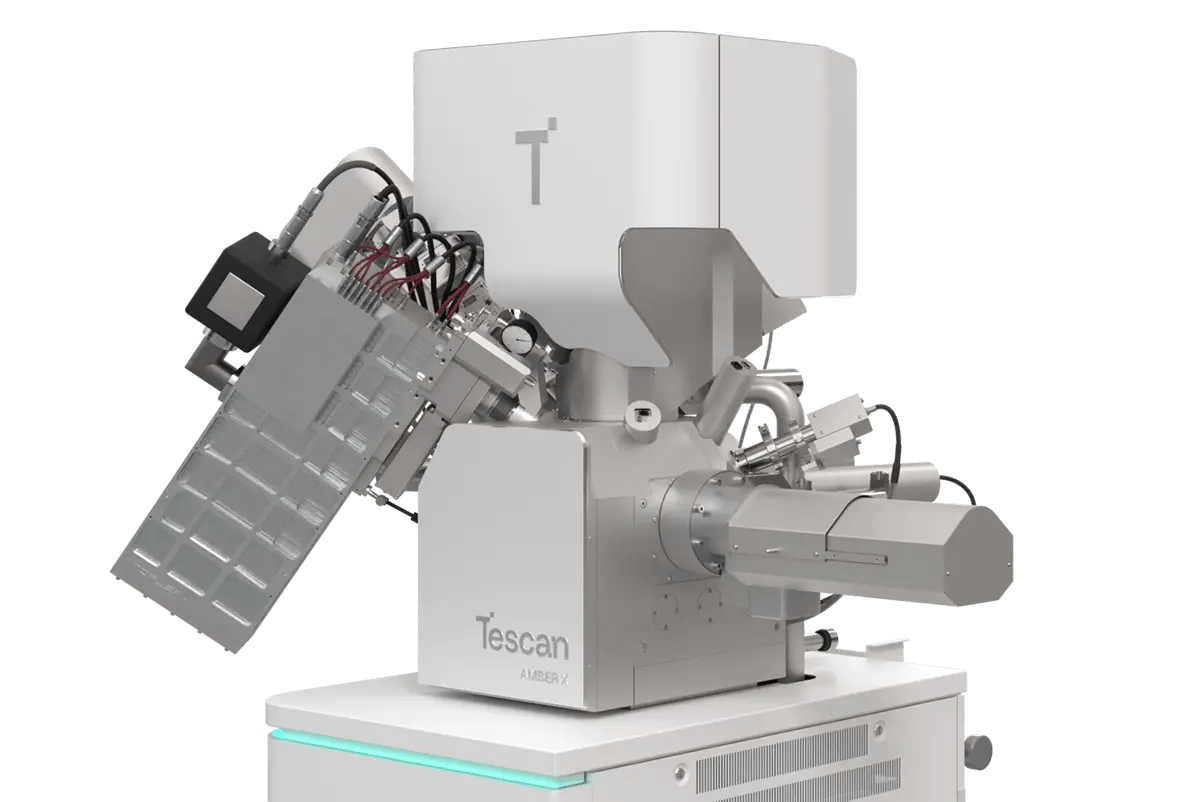

AMBER-X2

This is a title

Contextual advertising can be profitable. It can either pay for your hosting and maintenance costs for you website or it can pay for a lot more.
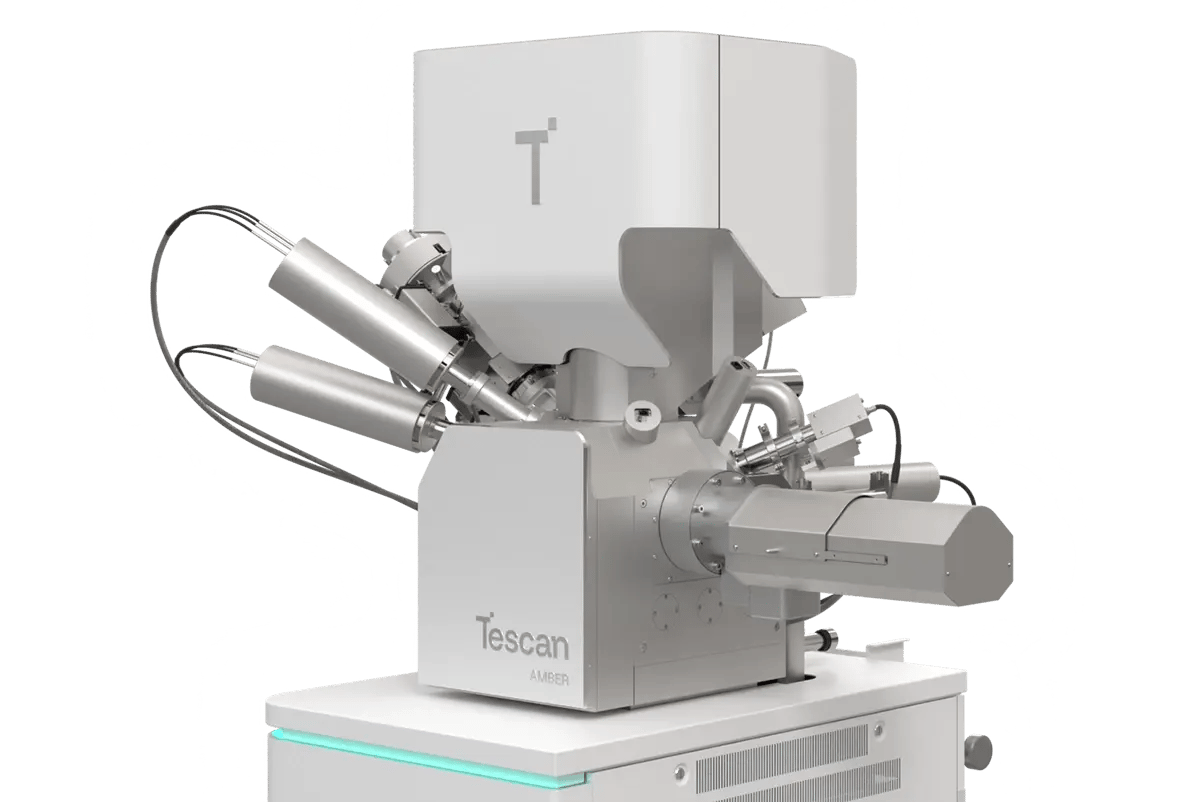
AMBER 2

GET IN Touch

Contact us

map

Your nearest office is:

Tescan Brno
Libušina tř. 21
623 00 Brno - Kohoutovice

Czech Republic

+420 530 353 411
info@Tescan.com