

WEBINAR | Up to 40% Faster Automated TEM Lamella Preparation with new Ga⁺ FIB Column

Visualizing Dynamic Pore-Scale Fluid Flow in CO₂ and H₂ Storage

Micro-CT Imaging for Subsurface Energy Storage and Sequestration.

hero
hero
Unlocked content

Advanced imaging of pore-scale processes is critical for evaluating the safety and viability of subsurface energy strategies. TESCAN’s dynamic micro-CT solutions provide the spatial and temporal resolution needed to observe fluid flow mechanisms that govern carbon dioxide sequestration and underground hydrogen storage.

Why Studying Pore-Scale Fluid Flow

with TESCAN?

01
Root of the Problem

Common Challenges in High-Resolution Geological Imaging

Understanding subsurface fluid flow is essential to support large-scale deployment of geologic CO₂ utilization and storage (CCUS ) and underground H₂ storage. However, the complex behavior of multiphase fluids in heterogeneous porous media is not easily captured with conventional techniques.

Common challenges include:

  • Limited ability to resolve capillary trapping and fluid displacement behavior at the pore scale

  • Incomplete characterization of spatial heterogeneity and pore connectivity in reservoir rocks

  • Difficulty observing unsteady-state flow dynamics in real time

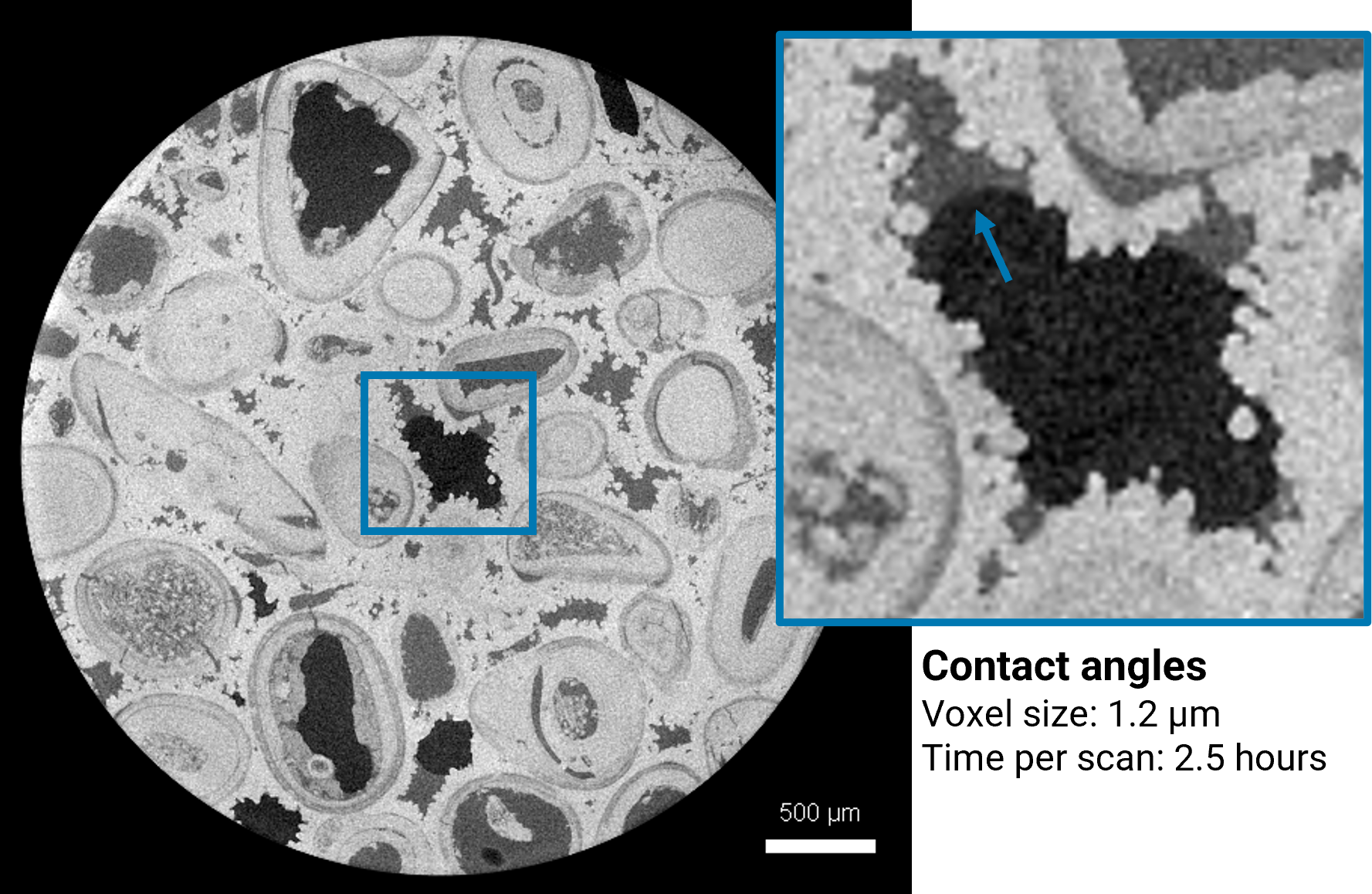
  • Uncertainty in wettability measurements and contact angle assessments at in-situ conditions

  • Lack of direct visualization for trapping, saturation, and dissolution mechanisms in H₂- and CO₂-brine systems

These issues hinder reliable prediction of storage efficiency, recovery, and long-term containment.

02
Materials and Methods

Workflow Description

TESCAN’s dynamic micro-CT workflow for pore-scale fluid flow analysis is designed for real-time, high-resolution imaging under subsurface-like pressure and temperature conditions. The typical workflow includes:

Sample Preparation

Core plugs or mini plugs are loaded into a core holder  with fluid and gas injection capabilities.

In-situ Imaging Setup

The sample is maintained at reservoir conditions during imaging using a sealed pressure vessel.

Dynamic Real-Time Image Acquisition

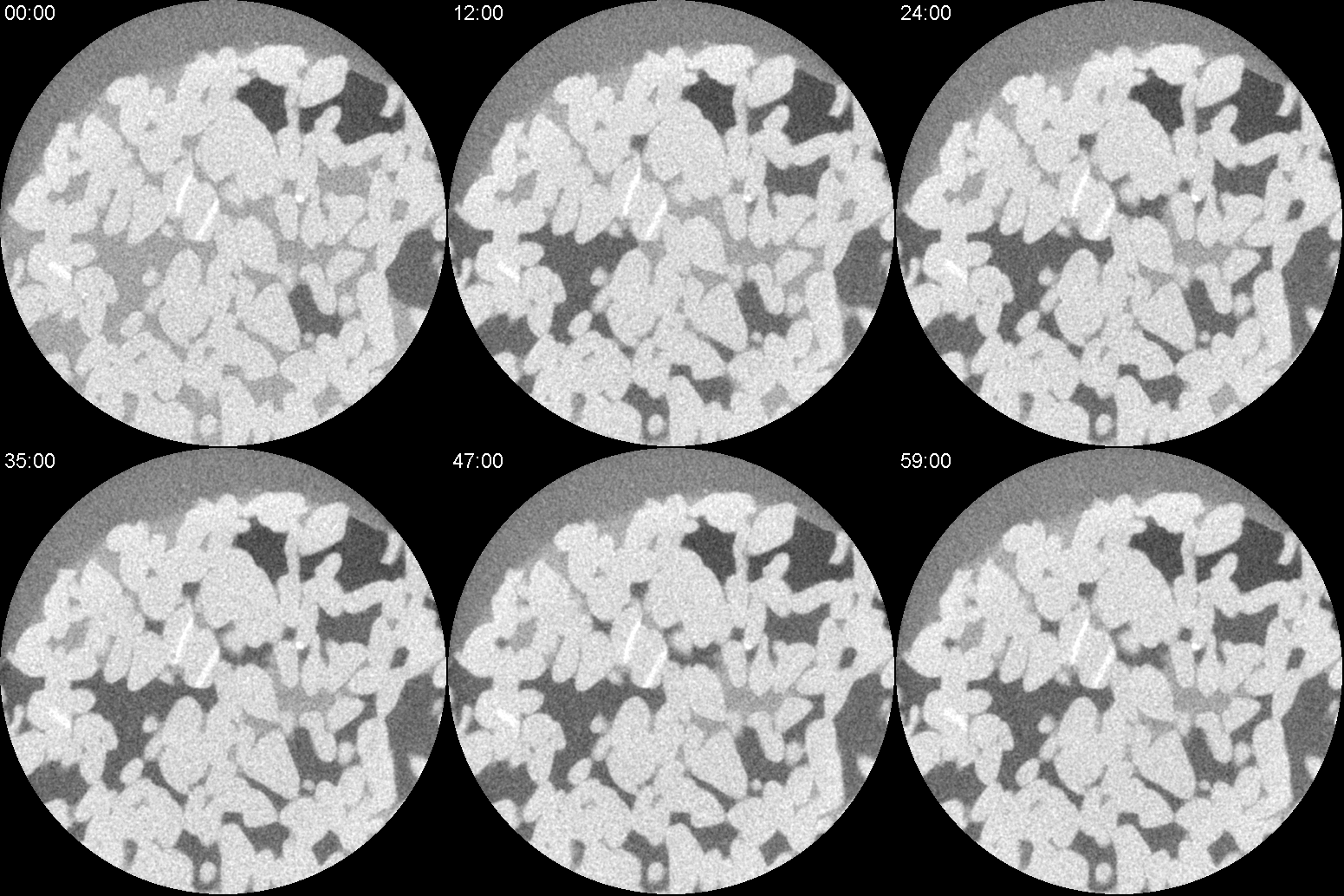
Continuous 4D imaging captures fluid displacement and redistribution with no interruption between scans. 

Parameter Extraction

Data is used to derive relative permeability, contact angle distributions, and capillary number dependencies.

This approach enables researchers to study the evolution of CO₂ and H₂ distribution under controlled dynamic conditions.

03
Results and Discussion

Method in Focus: Micro-CT for Pore-Scale Characterization

X-ray micro-computed tomography (micro-CT) is the cornerstone of this workflow. It enables:

  • High-resolution 3D visualization of porous media architecture

  • In-situ multiphase imaging for tracking CO₂ or H₂ saturation over time

  • Quantification of capillary trapping and fluid-rock interactions

  • Measurement of pore size distributions, connectivity, and heterogeneity

Dynamic micro-CT captures displacement, drainage, and imbibition events with temporal resolution suitable for modeling unsteady-state flow and capillary effects in real reservoir materials.

GET IN Touch

Contact us

Get the most out of Tescan

This is more than information; it's an advantage. We've compiled our technical whitepapers, detailed product flyers, and on-demand webinars to provide you with the knowledge that makes a real difference. Sign up now to access the insights you need to make an impact.

Tescan Instruments & Technology

Used in This Workflow

TESCAN UniTOM XL

Large-Volume Dynamic Imaging for Subsurface Core Analysis TESCAN UniTOM XL delivers dynamic 3D imaging of geological samples at high resolution across large volumes. It supports in-situ core flooding experiments and enables:

  • Real-time imaging during multiphase fluid flow

  • Core-scale resolution with micrometer detail

  • Analysis of phase distribution, pore connectivity, and heterogeneity
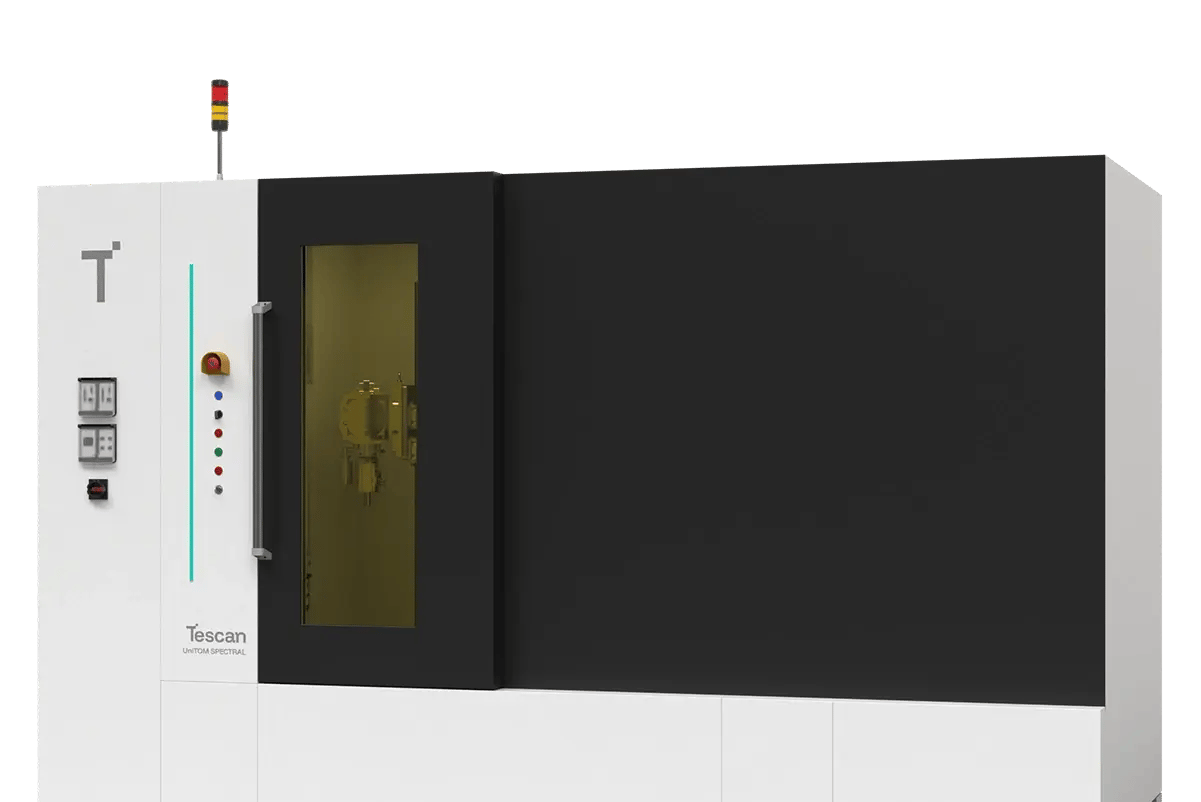
MICRO_UniTOM_XL_1-2

TESCAN UniTOM HR

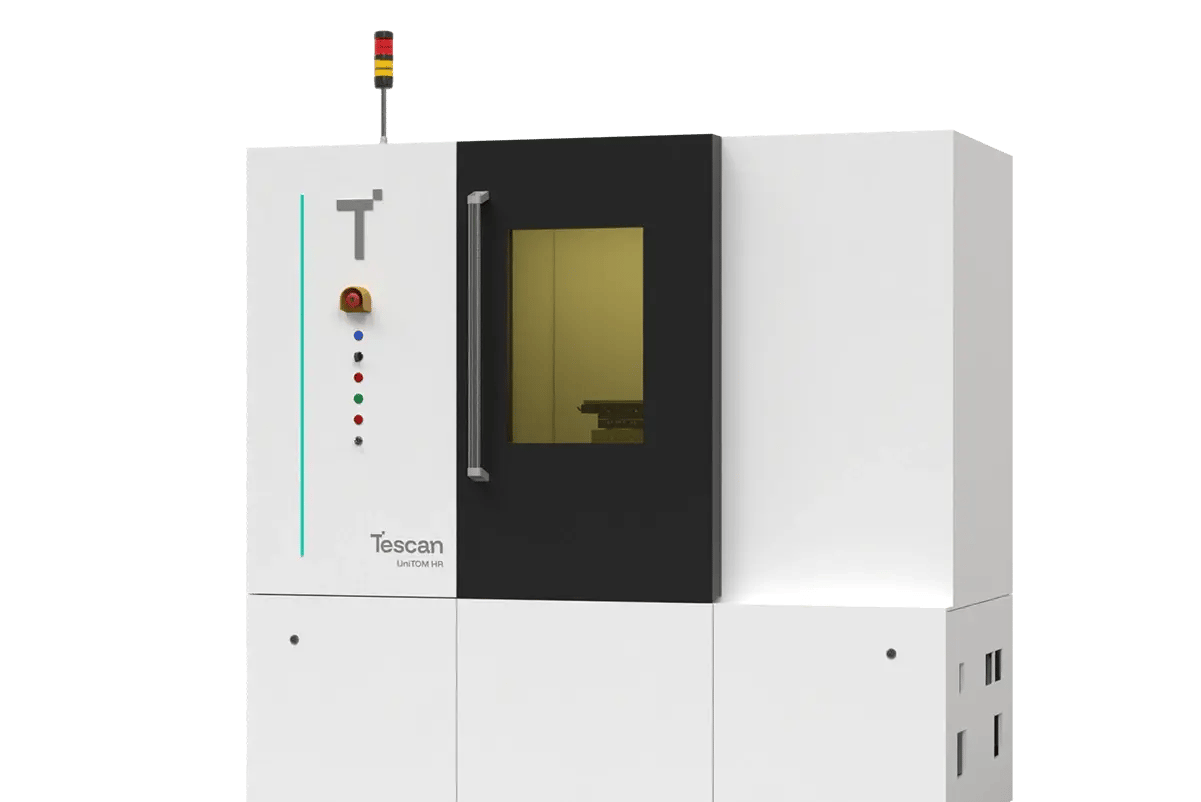
High-Resolution Pore-Scale Micro-CT for Reactive Transport Studies Designed for pore-scale precision, TESCAN UniTOM HR enables:

  • Imaging down to 0.6 μm voxel size for ultra-fine detail

  • Visualization of individual pore throats, film flows, and snap-off events

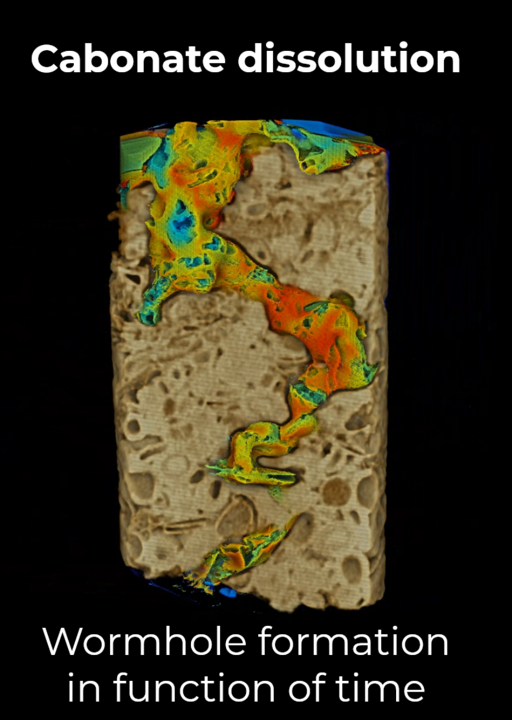
  • In-situ environmental control for reactive fluid-rock interactions

MICRO_UniTOM_HR_1-2

GET IN Touch

Contact us

map

Where can you find us:

Tescan Brno
Libušina třída 21
623 00 Brno
Czech Republic

info@Tescan.com