

WEBINAR | Up to 40% Faster Automated TEM Lamella Preparation with new Ga⁺ FIB Column

Enhancing Mineral Processing Efficiency with Automated Mineralogy

SEM-based Automated Mineralogy is the definitive technique for comprehensive analysis of ore texture, mineralogy, and chemistry at every stage of the beneficiation process—delivering deeper insights that drive smarter decisions, improved recovery, and reduced operational risk.

sub-area-Bateries-Failure_Analysis

Contents

Challenging Bias in Lithium Ore Analysis

Manual methods and limited sampling can distort the true picture of lithium deposits. When data lacks consistency, grading suffers and recovery falls short. Accurate, repeatable mineral characterization brings clarity—helping the industry move from uncertainty to confident, data-driven extraction.

  • Quantify Thousands of Particles - Automatically detect and segment thousands of particles per sample to produce statistically robust, unbiased datasets.

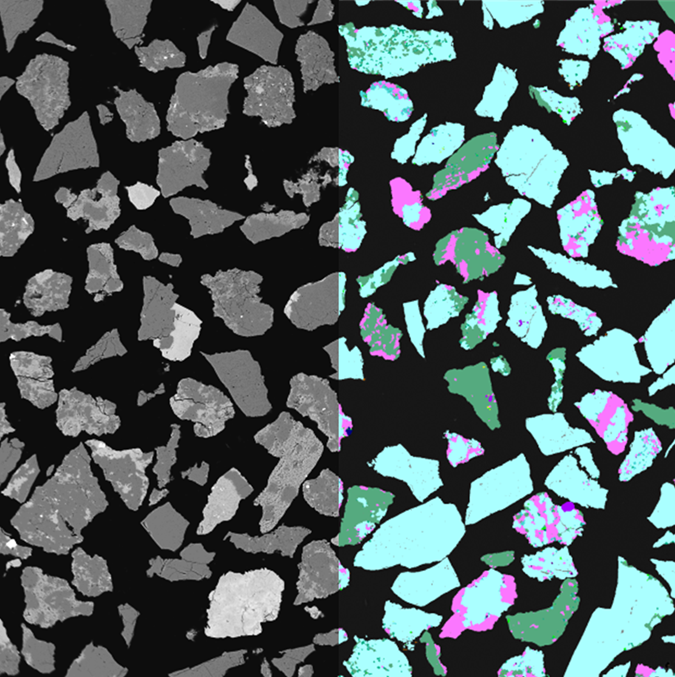
  • Determine Mineral Liberation and Association - Assess mineral intergrowth and liberation of lithium-bearing phases to support geometallurgical characterization.

  • Classify Phases Automatically - Use integrated EDS spectra for consistent, objective phase identification and standardized mineral classification.

  • Optimize Comminution Efficiency - Analyze particle morphology and liberation to guide grind size decisions and improve energy efficiency in processing.
1_Characterization of lithium ores using correlative SEM imaging and EDS elemental mapping-4
Optimize Mineral Recovery and Improve Processing Efficiency with TIMA Textural Analysis

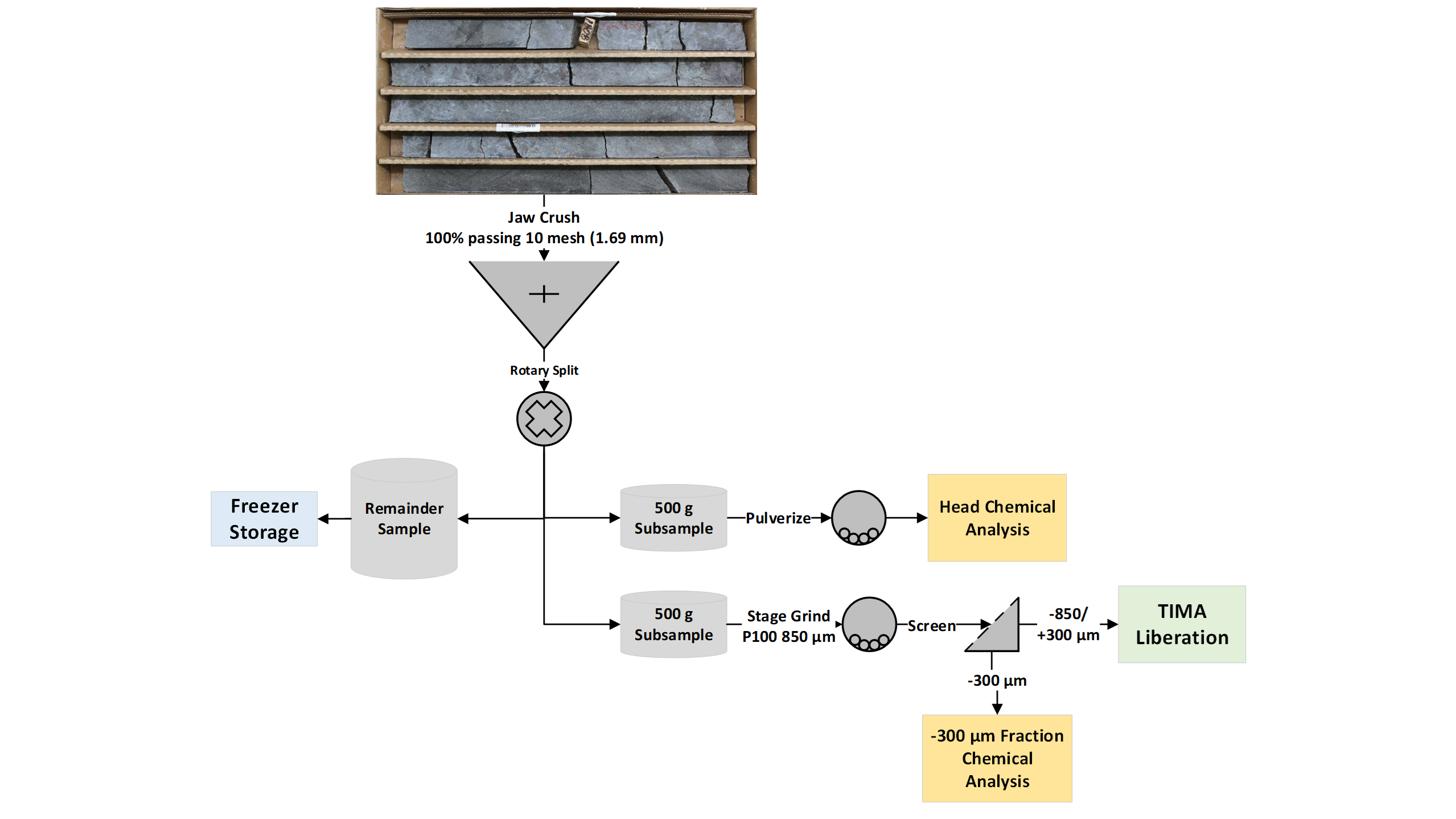
Drill core logging and petrographic studies reveal key mineral and gangue associations but capture only limited ore fragments. To understand metallurgical behavior at scale, representative ore samples are needed to evaluate flowsheets and recovery. Mineral textural analysis provides quantitative grain size data throughout project stages—supporting process design, ore zoning, and variability assessment.

  • From Exploration to Metallurgy - Drill core logging and petrographic studies provide early mineral insights, but they only represent small, localized samples and lack production-scale relevance.

  • Geometallurgical Evaluation - Representative ore-grade samples are essential for assessing metallurgical flowsheets and understanding ore variability across deposits.

  • Quantitative Textural Analysis - Mineral textural analysis quantifies natural grain size distribution and supports both early-stage flowsheet design and later-stage variability diagnosis.

  • Actionable Metallurgical Insights - Textural data reveal key differences in mineral liberation, grain size, and gangue associations—informing grind size, recovery optimization, and blending strategies.

Collect Early-stage Measurements of Key Mineral Indices
Feed Your Geometallurgical Models with Tescan TIMA Data

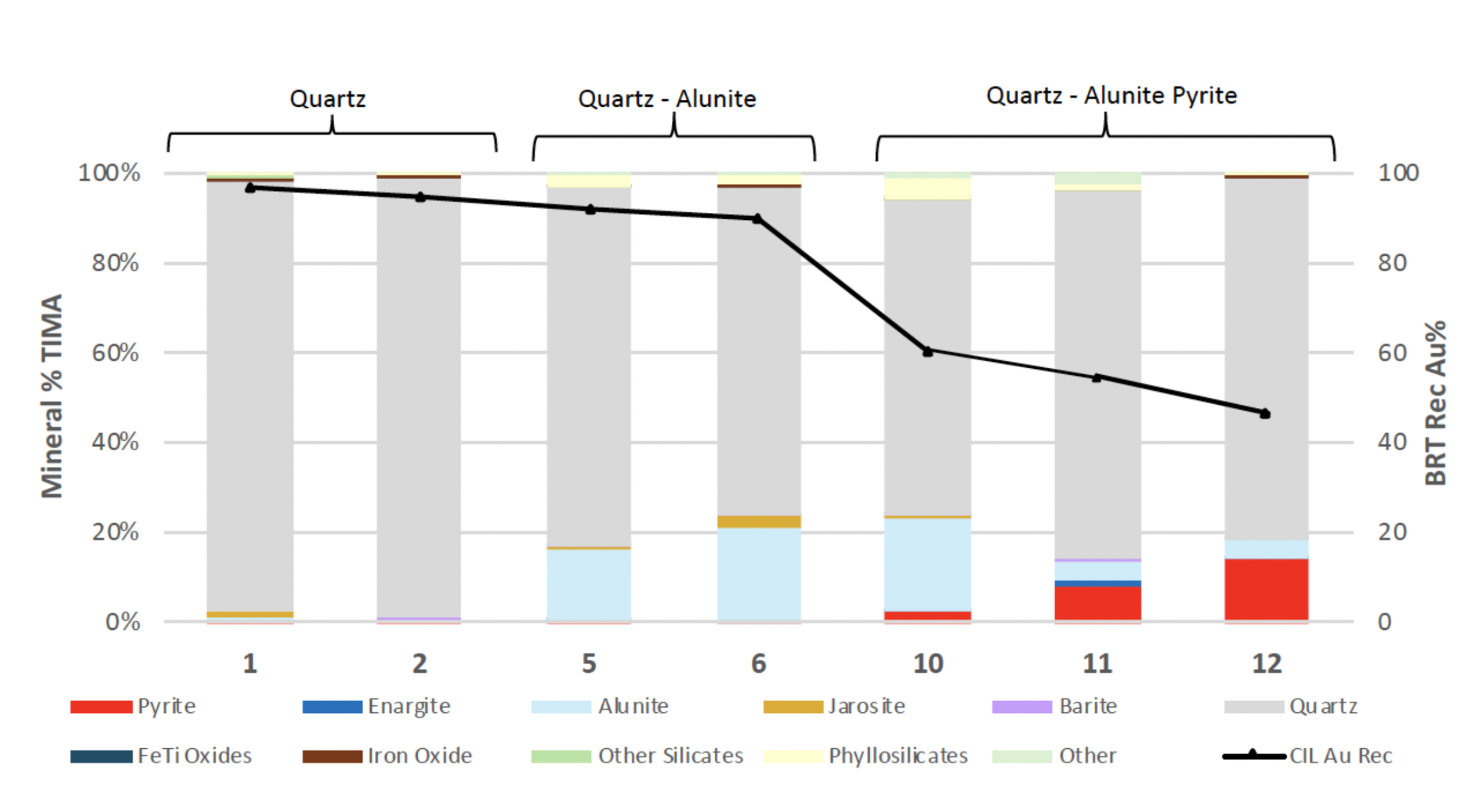
Geometallurgical analysis reveals gold mineralogy, grain size, and associations with gangue minerals—providing insights into whether gold occurs as native metal, within other minerals, or as refractory forms.

  • Understanding Gold Recovery Variability - Natural differences in gold type, grain size, and mineral associations strongly influence recovery rates and overall project economics.

  • Integrated Geometallurgical Approach - Effective gold recovery prediction requires combining geological, mineralogical, and metallurgical data across geological domains.

  • Detailed Gold Characterization - High-resolution mineral mapping identifies gold grain size, distribution, and host minerals—revealing refractory and fine-grained occurrences.

  • Data-Driven Process Optimization - Quantitative analysis of gold liberation and associations supports flowsheet design, improves leaching strategies, and enhances metallurgical performance.

Obtain minerology data to identify and characterize gold occurrences

Tescan Solutions

for Mineral Processing

TESCAN TIMA

Tescan TIMA automates particle-based mineral analysis with integrated EDS and high-throughput imaging. Mineralogists and metallurgists can perform automated mineralogy for lithium analysis and generate consistent, reproducible datasets to support process-relevant mineral characterization. 

  • Quantitative particle analysis: statistically robust results across full sample sets 

  • Integrated EDS classification: consistent phase ID across users and sessions 

  • Automated workflows: reduce bias and standardize mineral quantification

  • Batch analysis mode: analyze over 40 samples per unattended run

Explore the system that moves your research forward 

Tescan instruments are designed to help you get answers. Fast and precisely. Talk to our experts and see the solution in action. 

Fill the form to book a demo

GET IN Touch

Contact us

map

Where can you find us:

Tescan
Libušina třída 21
623 00 Brno
Czech Republic

info@Tescan.com