

WEBINAR | Up to 40% Faster Automated TEM Lamella Preparation with new Ga⁺ FIB Column

Validate New Mineral Discoveries with Tescan Sample Preparation and EBSD Analysis

Prepare samples, confirm elemental composition and produce crystallographic data for newly discovered materials with Tescan FIB-SEM.

hero
hero
Unlocked content

Prepare samples from micron-sized grains and perform crystallographic characterization with a single instrument workflow

While there are already thousands of described mineral species throughout the world, geoscientists continue to seek new, undiscovered minerals. For any newly identified mineral to be recognized by the IMA/CNMNC, crystallographic and other data must be submitted.

Tescan FIB-SEM makes it easy for geoscientists to go from sample preparation to analysis, in a single instrument. FIB polishing enables site specific, precisely controlled sample preparation that preserves details in the volume. And the SEM performs EBSD on the fine grains to complete the elemental and crystallographic analysis. 

Why Use Tescan FIB-SEM

for Sample Preparation and Mineral Characterization?

01
Root of the Problem

Why Tescan FIB-SEM is ideally suited to prepare and characterize mineral samples

Geoscientists have access to numerous physical and analytical techniques for both preparing samples and identifying a mineral’s composition and characteristics.

For sample preparation, most laboratories use electropolishing, chemical etching, vibration polishing, laser polishing, Ar broad ion beam milling, and FIB polishing in a FIB-SEM. But, unlike the other methods mentioned above, FIB polishing - can be accurately controlled by the operator. This is critical for preserving the details of mineral grains in the sample volume.

For the structural characterization X-ray diffraction is typically used. However, EBSD allows acquisition of diffraction patterns with submicron lateral resolution.

The advantage to using FIB-SEM instead of other methods is its ability to locate specific mineral grains, polish the sample locally, and perform high resolution structural characterization—in a single instrument workflow.

02
Materials and Methods

How Data wascollected

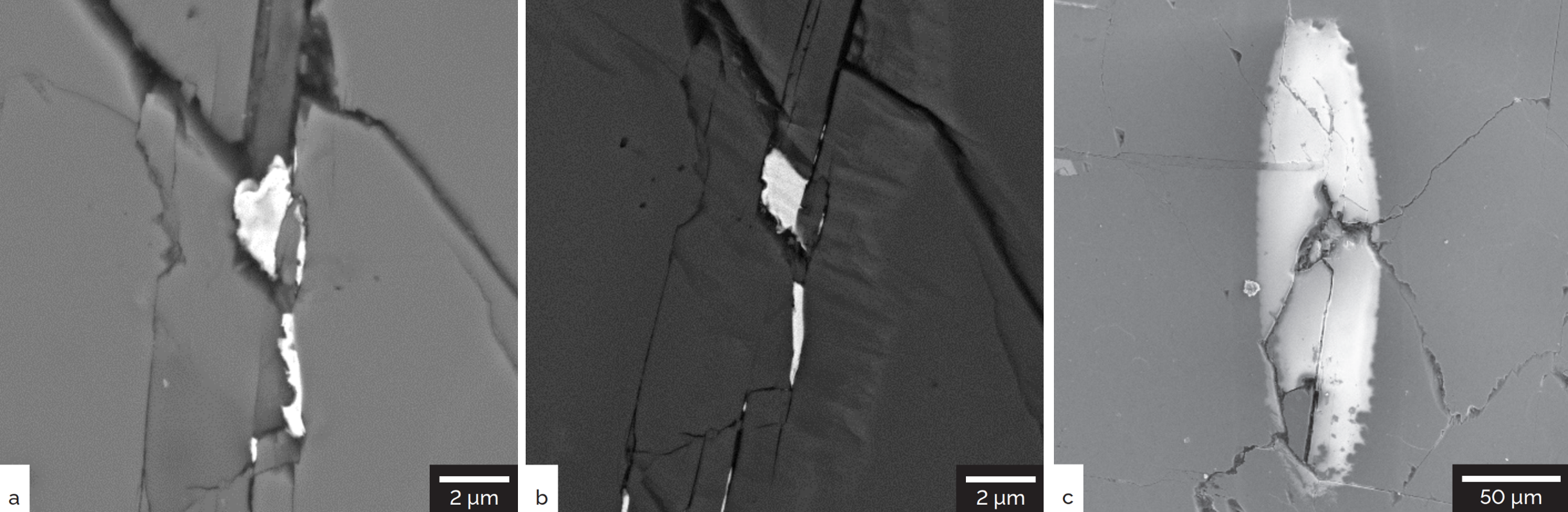
To locate the minerals of interest, SEM imaging was used to navigate to the area of interest. Tescan FIB-SEM instruments navigate using known coordinates, mineral maps from other instruments like TESCAN TIMA, or by identifying features of interest during SEM imaging..

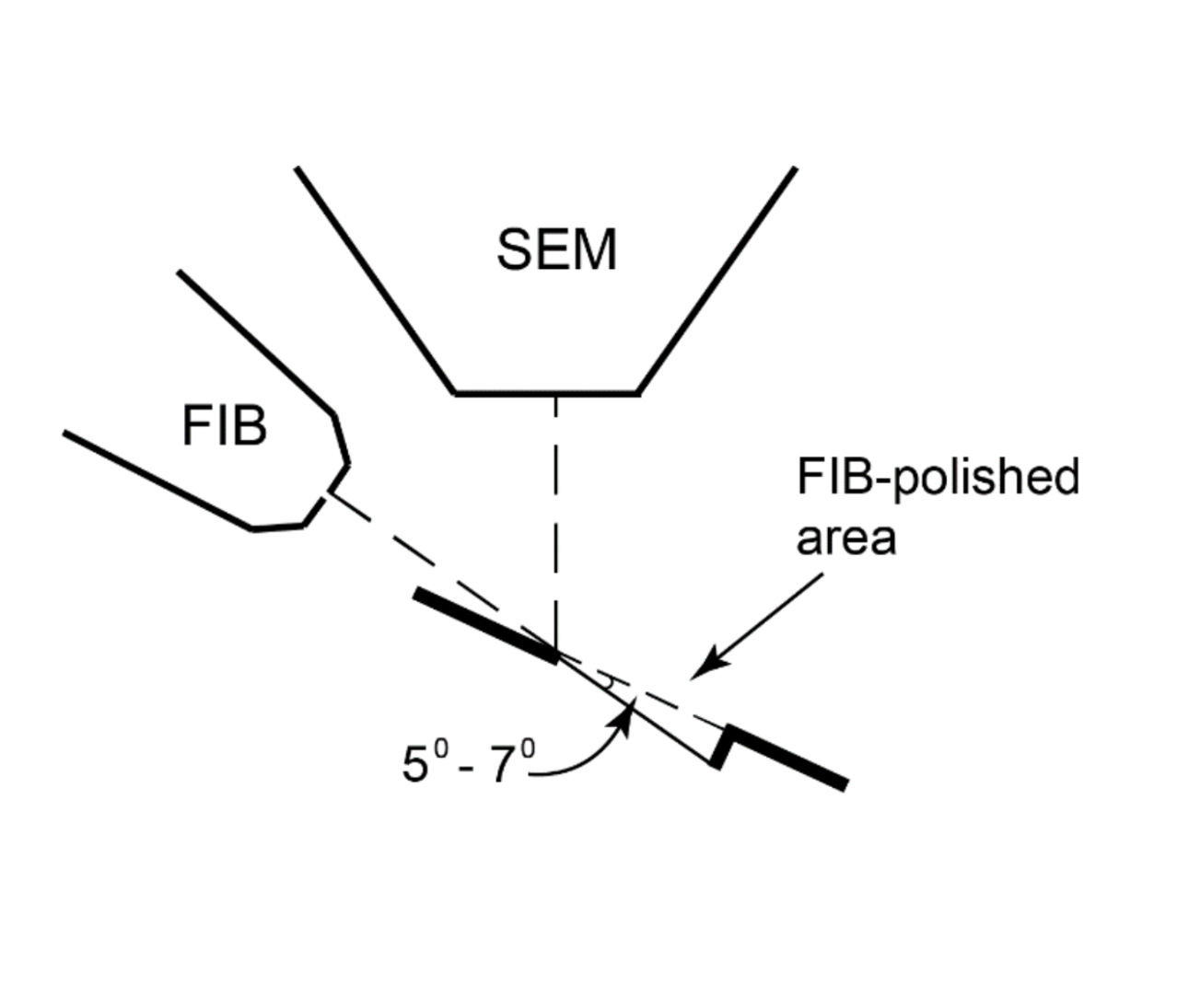
Next, FIB polishing at low accelerating voltage is used to prepare the sample for crystallographic characterization. Local polishing of the mineral grain prior to performing EBSD creates the smooth surface that is essential for obtaining high quality diffraction patterns. The polishing progress can be monitored in real-time to ensure that the sample reaches the desired quality while avoiding loss of the grain of interest. Depending on the sample, preparation can be achieved in the range of 5 to 50 minutes.

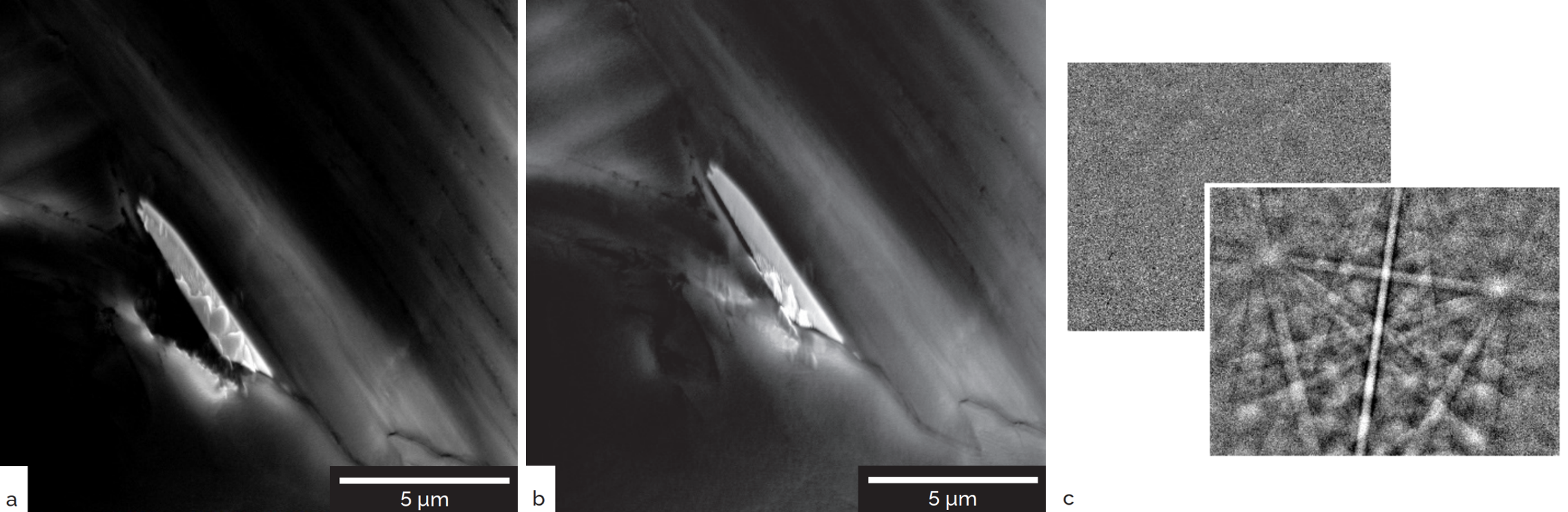
Finally, EBSD analysis is used to determine the grain's crystallographic structure and its orientation. A non-destructive technique, because it can be applied to samples without altering their structure or properties, EBSD is fully embedded in the FIB-SEM platform to deliver a complete imaging and characterization workflow

03
Results and Discussion

The IMA/CNMNC’s approval of EBSD as a recognized source for crystallographic data for structural comparison opened the door to developing a complete workflow—from sample preparation to final crystallographic data—that can be performed entirely within the FIB-SEM instrument. 

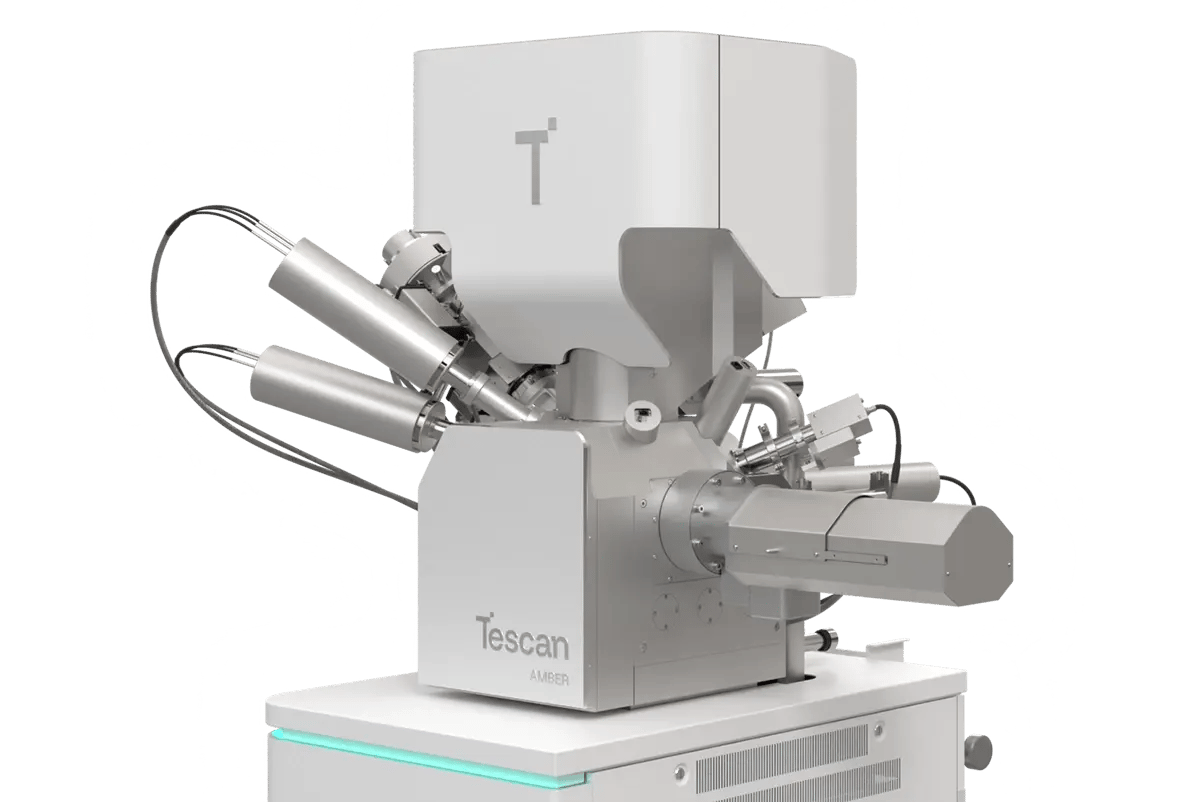
Polishing by focused ion beam in the Tescan AMBER FIB-SEM provides several advantages. The major advantage is in-situ visual monitoring of the FIB polishing process by using live SEM imaging. This workflow allows samples to be coated , since the coating can be locally removed.

This FIB polishing workflow can be applied to EBSD sample preparation for any unique, small-scale features which could be destroyed by using standard non-localized polishing methods like Ar broad ion beam milling or vibration polishing, among other techniques.

Using Tescan AMBER FIB-SEM with embedded EBSD facilitated the discovery and identification of new mineral species occurring in micron-sized grains. Crystallographic data provided by EBSD was used to validate the findings.

GET IN Touch

Contact us

Get the most out of Tescan

This is more than information; it's an advantage. We've compiled our technical whitepapers, detailed product flyers, and on-demand webinars to provide you with the knowledge that makes a real difference. Sign up now to access the insights you need to make an impact.

Tescan Instruments & Technology

Used in This Workflow

Tescan AMBER or AMBER X FIB-SEMs with EBSD Detecto

The Tescan ATescan AMBER FIB-SEM with Orage™ 2 Ga⁺ FIB column is ideal for site-specific sample preparation at nanometer precision. The system provides excellent control over material removal, enabling localized polishing of micron-sized mineral grains.

Tescan AMBER X 2 with the Mistral™ Xe plasma FIB column is designed for site-specific preparation and offers polishing of large areas on heterogeneous samples. The system delivers high beam currents for faster milling rates, ensuring efficient polishing of extensive regions while maintaining uniform, artifact-free surface quality.

Key Benefits of Tescan FIB-SEMs for EBSD Sample Preparation

  • Significantly improves EBSD pattern quality and indexing success rate thanks to precise FIB-SEM polishing that delivers smooth, deformation-free surfaces ideal for EBSD analysis of small features and delicate minerals.

  • Automated Low Angle Polishing workflow in the Essence™ software ensures optimal surface preparation by automatically adjusting the sample position, minimizing polishing artifacts, and using low ion energies for the final finishing stage.

  • Real-time SEM monitoring during FIB polishing prevents excessive material removal and ensures preservation of the region of interest, resulting in more precise and reliable sample preparation.

  • Intuitive and easy-to-use Tescan Essence™ software automates SEM and FIB alignments and includes advanced stage collision protection, allowing confident and efficient operation even for non-expert users.

  • Comprehensive imaging capability with multiple in-column and chamber detectors enables simultaneous SE and BSE signal acquisition, providing detailed topographical and compositional information from a single system.
AMBER 2

GET IN Touch

Contact us

map

Where can you find us:

Tescan Brno
Libušina třída 21
623 00 Brno
Czech Republic

info@Tescan.com